Think You Know Which Type of Woodpecker Is at Your Feeder? These Two Are Easy To ConfuseJennifer Bové, PetHelpful AI Desk,
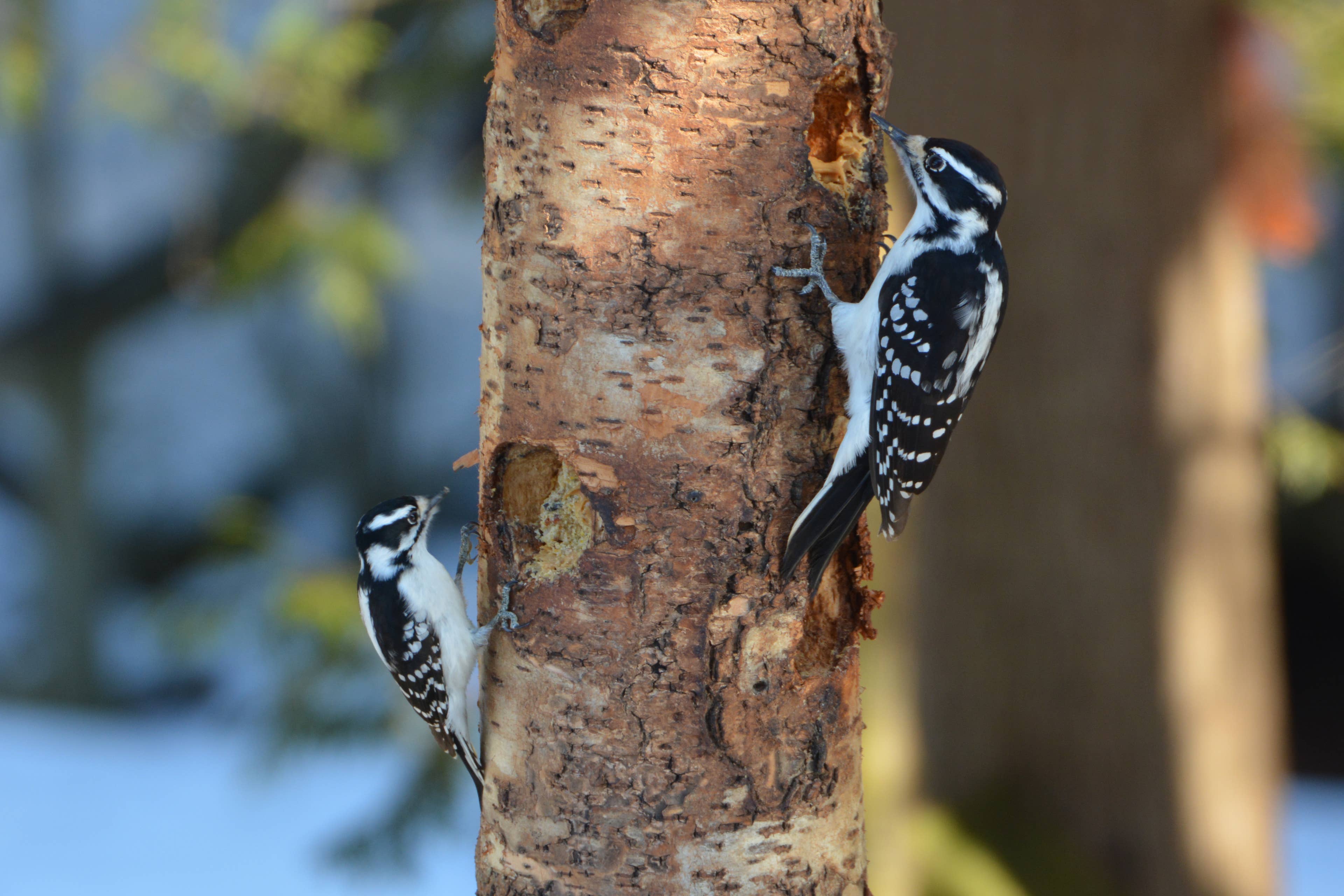
A small black-and-white woodpecker lands on your backyard suet feeder, grabs a bite and quickly flies away. Was it a downy or a hairy woodpecker? If you’re not sure, you’re in good company. These two common North American birds look remarkably alike, and even experienced birdwatchers sometimes need a closer look to tell them apart.Both species have checkered black-and-white feathers, a white stripe down the back and, in males, a small red patch on the back of the head. They also visit many of the same feeders and habitats.Fortunately, a few details can help you distinguish them. The length of the bill relative to the head is one of the best identification clues, while body size and tail markings offer additional evidence.Related: Scientists Discover Surprising Brain Benefits of Birdwatching
What’s the Difference Between a Downy and Hairy Woodpecker?
The downy woodpecker (Dryobates pubescens) is smaller, with a short bill that’s roughly one-third the length of its head. The hairy woodpecker (Leuconotopicus villosus) is noticeably larger, with a long, sturdy bill nearly as long as its head. Downy woodpeckers also have black spots or bars on their white outer tail feathers, while most eastern hairy woodpeckers have unmarked white outer tail feathers.
Although their similar plumage can make identification tricky, these differences become easier to recognize with practice.Related: Which Birds Sing at Night? 9 Voices You Might Hear After Dark
4 Ways To Tell Downy and Hairy Woodpeckers Apart1. Compare Their Bill Lengths
If you can see the bird’s profile, start with its bill. This is often the most dependable way to distinguish the two species.
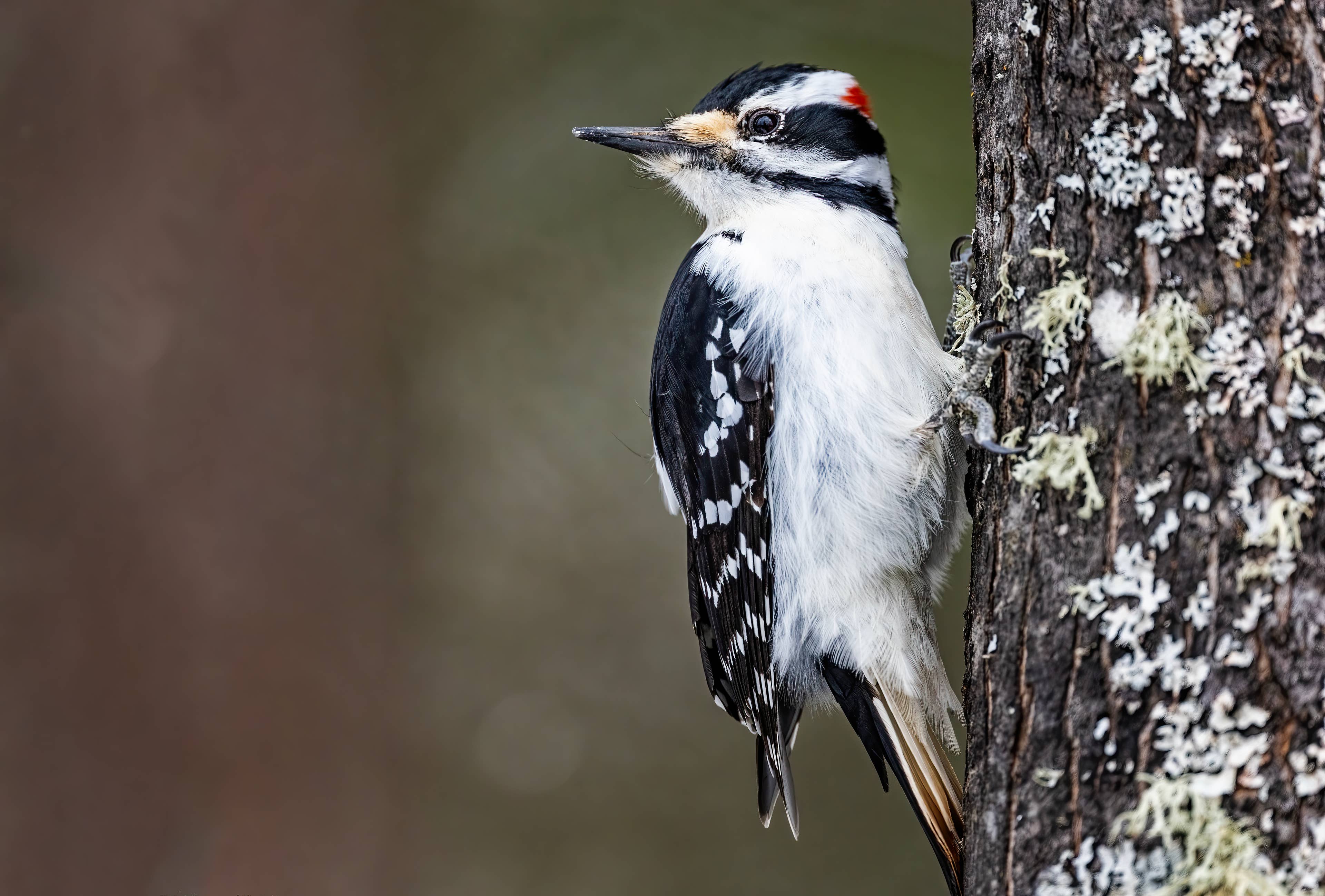
Downy WoodpeckerDarren Bennett / Getty Images
A downy woodpecker’s bill is about one-third as long as the distance from the base of the bill to the back of the head. It looks small compared with the bird’s overall face.
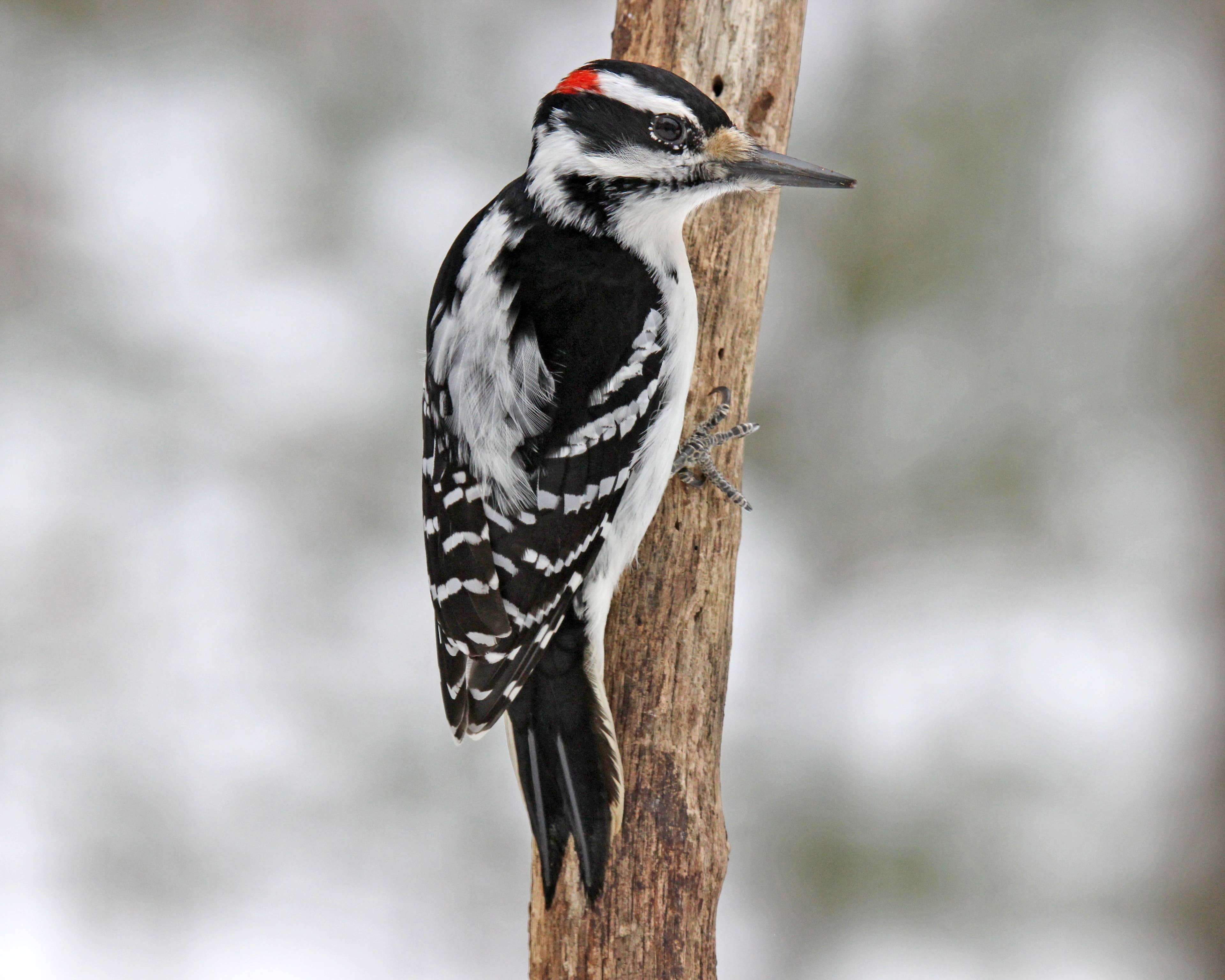
Hairy Woodpeckersuefeldberg / Getty Images
A hairy woodpecker has a much longer, thicker bill that is nearly as long as the distance from the base of the bill to the back of the head. Its pointed bill looks proportionally more substantial.
This difference is especially useful when a bird is perched sideways on a feeder or tree trunk.
Identification tip: Don’t judge the bill by its absolute length. Compare it with the head. A short bill relative to the head suggests a downy, while a bill nearly as long as the head suggests a hairy.
2. Look at Overall Body Size
Hairy woodpeckers are considerably larger than downy woodpeckers, although the difference can be difficult to appreciate without a familiar reference.
Feature
Downy Woodpecker
Hairy Woodpecker
Approximate length
About 6.5 inches
About 9.25 inches
Overall size
Similar to a large sparrow
Similar to an American robin
Bill
Short and delicate
Long and sturdy
Build
Small and compact
Larger and more robust
Typical weight
0.7–1 ounce
1.4–3.4 ounces
A hairy woodpecker is considerably larger in overall length than a downy, making it the more substantial-looking bird. However, judging size can be difficult when a bird is alone. If possible, compare it with nearby feeder components, branches or other familiar birds rather than relying on memory.
3. Check the Outer Tail Feathers
The tail provides another useful identification clue, especially when you can see the underside of a perched or departing bird.
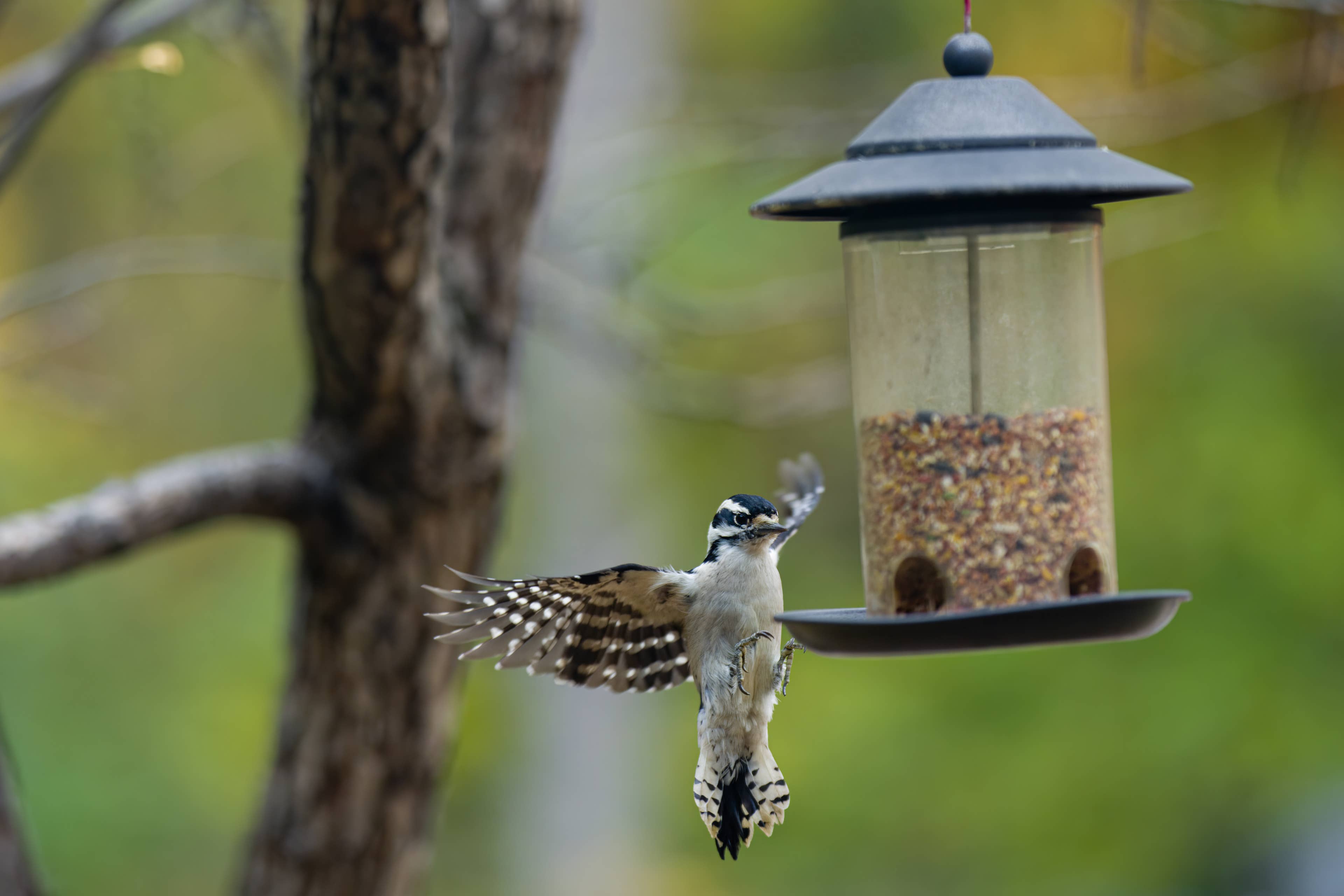
Downy Woodpecker (Note black-barred outer tail feathers.)doug4537 / Getty Images
Downy woodpeckers have white outer tail feathers marked with black spots or bars. These markings can look like little dark dots against the white feathers.
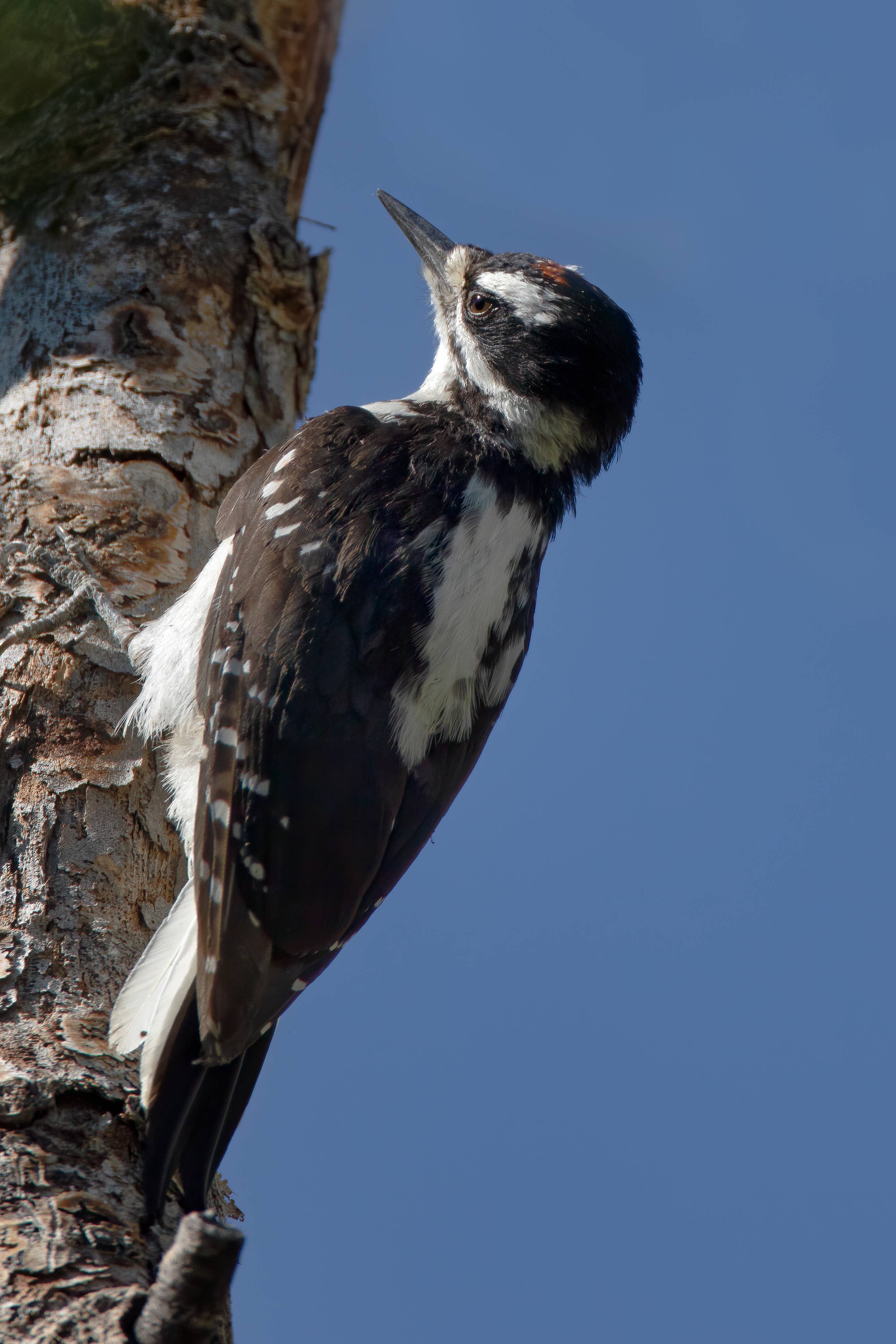
Hairy Woodpecker (Note plain white outer tail feathers.)M. Leonard Photography / Getty Images
Hairy woodpeckers in most of the eastern United States have plain white outer tail feathers without those dark markings.
There is an important geographic exception: Some Pacific-region and Newfoundland hairy woodpeckers also have black barring on their outer tail feathers.
Identification tip: If you see black spots on the underside of the white outer tail feathers, that’s a strong clue for a downy woodpecker. Completely white outer tail feathers are particularly useful for identifying an eastern hairy woodpecker.
4. Examine the Black Shoulder Marking
Both species have a black-and-white pattern on their wings and backs, but another subtle feature can help distinguish them.
Look for a small black, comma-shaped marking that extends from the shoulder toward the upper breast. This marking is often more clearly defined on a hairy woodpecker. On a downy woodpecker, it tends to be less noticeable or less well developed.
It’s a secondary identification feature, however, and shouldn’t outweigh the bill and size differences.
What About the Red Head Patch?
Adult males of both species have red on the back of the head; adult females lack that nape patch. Juveniles may show crown coloring instead, so use age-appropriate criteria when assessing sex.
Because the red patch appears on both species, it doesn’t help distinguish one from the other. However, it can help identify a male once you’ve narrowed down which woodpecker you’re observing.
Juvenile males of both species may have reddish coloring on the crown rather than the more familiar adult nape patch.
Where Do Downy and Hairy Woodpeckers Live?
Both species are widespread across North America, and their geographic ranges overlap extensively.
Downy woodpeckers are especially adaptable. They live in deciduous woodlands, orchards, parks and suburban neighborhoods, often visiting backyards with mature trees and feeding stations.
Hairy woodpeckers also inhabit forests and wooded residential areas but generally favor larger trees. They’re often found in mature forests, woodland edges, river groves and parks with substantial tree cover.
Both species are year-round residents across much of their ranges, although some northern and mountain populations make seasonal movements.
What Do Downy and Hairy Woodpeckers Eat?
Both woodpeckers primarily eat insects, particularly beetle larvae, ants and other invertebrates found in trees and beneath bark. They also visit backyard feeders, where they readily eat suet and seeds.
Downy woodpeckers are especially agile foragers. Their smaller size allows them to explore thin branches, weed stems and other places that larger woodpeckers can’t easily reach.
Hairy woodpeckers tend to do more excavating and pounding on tree trunks, using their larger bills to reach insects hidden deeper in wood.
To attract both species, consider offering:
Suet: A popular high-energy food, particularly during colder months.
Black-oil sunflower seeds: A familiar feeder food that attracts a variety of backyard birds.
Peanuts: Unsalted peanuts can provide another food option when offered in an appropriate feeder.
Providing mature trees and native vegetation can also make your yard more attractive by supporting the insects woodpeckers naturally eat.Related: How To Stop Crows From Bullying Songbirds at Your Feeders
Which Woodpecker Is More Likely to Visit Your Feeder?
If you regularly see a small black-and-white woodpecker at a suburban feeder, there’s a good chance it’s a downy woodpecker.
Downies are particularly common in residential yards, parks and smaller wooded areas. They’re frequent visitors to suet feeders and often appear alongside chickadees and nuthatches.
Hairy woodpeckers also visit backyard feeding stations, but they’re generally less common in suburban settings, particularly in the eastern United States. Their preference for larger trees and more extensive wooded habitats can make them less frequent visitors.
Still, both species are possible backyard guests, especially in neighborhoods with mature trees.
How Can You Identify a Downy or Hairy Woodpecker Quickly?
When a woodpecker visits your feeder, you may have only a few seconds to identify it. Start by looking at the bill in relation to the head, then check the overall size and tail if the bird gives you a better view.
Remember these three basic clues:
Short bill and small body: Most likely a downy woodpecker.
Long bill and larger body: Most likely a hairy woodpecker.
Black markings on white outer tail feathers: Strong evidence of a downy, although regional variation in hairy woodpeckers means this clue needs context.
With a little practice, you’ll start recognizing these differences almost immediately. And the next time a black-and-white woodpecker lands on your feeder, you may be able to identify your visitor before it even flies away.
Sources
Downy Woodpecker Guide | Cornell Lab of Ornithology
Hairy Woodpecker Guide | Cornell Lab of Ornithology
How To Tell a Hairy Woodpecker From a Downy Woodpecker | National Audubon Society
Downy Woodpecker | Audubon Field Guide
Hairy Woodpecker | Audubon Field Guide
Related: What Is North Carolina’s State Bird? The Story Behind This Famous Songbird
This article was drafted with the assistance of AI and thoroughly reviewed, edited, and fact-checked by PetHelpful editors. See our complete AI Policy.
This story was originally published by PetHelpful on Nov 13, 2026, where it first appeared in the All Pets section. Add PetHelpful as a Preferred Source by clicking here.
Source: Nature



0 Comments